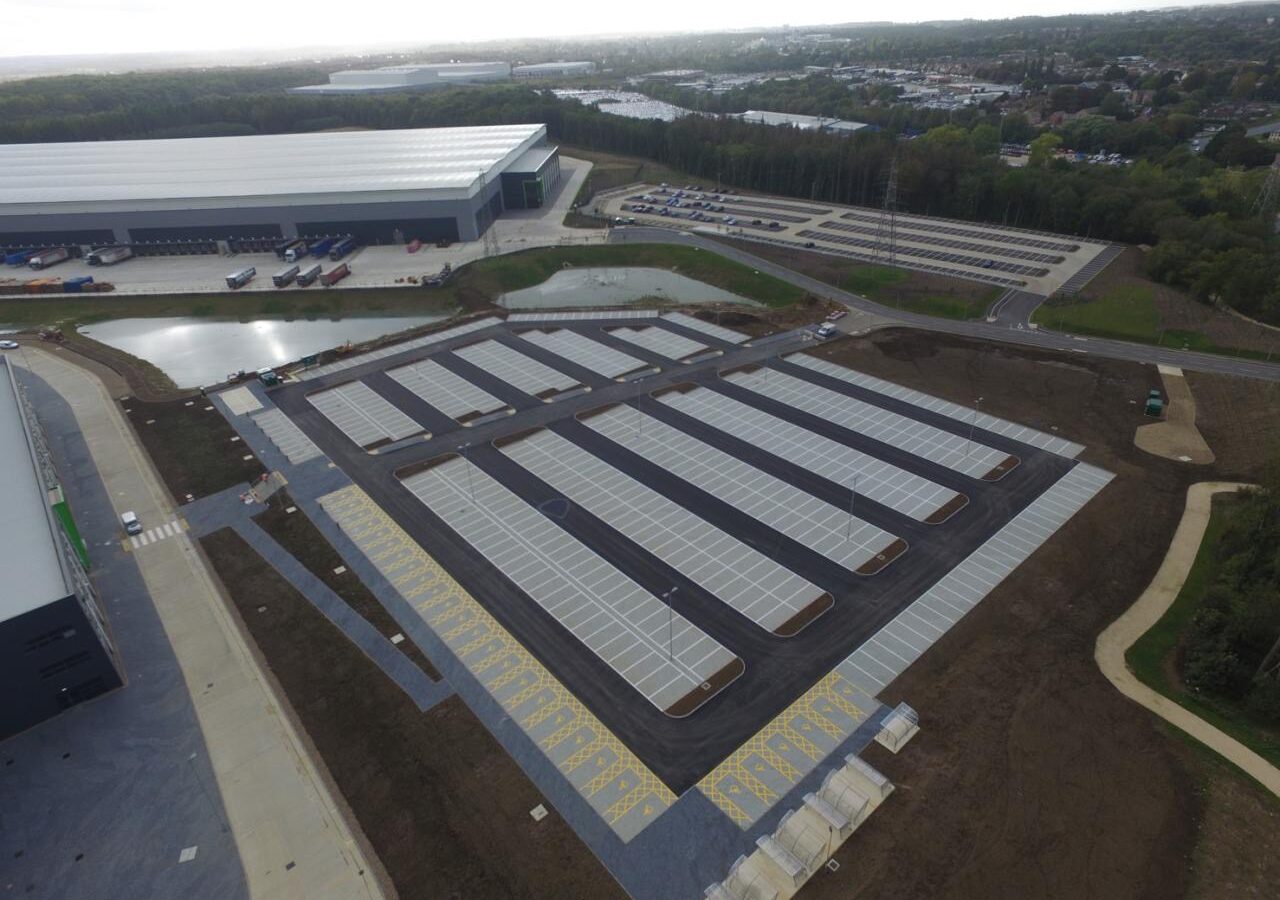
Both block paving and tarmac make excellent commercial car parks when the construction underneath is right. The best choice depends on the size of the area, how the site drains, the traffic it carries and how the car park will be maintained.
When tarmac makes sense
Tarmac is fast to lay across large open areas, which keeps programme time and cost down on big car parks and access roads. It gives a smooth, continuous surface that suits high volumes of cars and is simple to line mark.
When block paving makes sense
Block paving laid in a herringbone pattern interlocks under turning and braking vehicles, so it resists rutting. Individual blocks can be lifted and relaid after utility work with no visible patch. It also comes in permeable versions that let rainwater soak through into an open graded sub base, which helps meet sustainable drainage (SuDS) requirements.
Drainage decides a lot
If the site has limited capacity to discharge surface water, permeable block paving can remove the need for some gullies and attenuation tanks. Where drainage is straightforward, tarmac laid to good falls with gullies and channels works well.
Our advice
Many of our schemes combine both: tarmac for main running lanes and block paving for bays, footways and entrance areas. As a Brett Approved Paving Contractor laying 280,000m²+ of paving every year, we are happy to review your drawings and recommend the most cost effective option.